
blog
designing the case of the worst day ever
January 18, 2026
- the case of the worst day ever
- art & design
I have always been a huge fan of the detective genre. Movies, books, games—anything with a mystery. I grew up on the Nancy Drew PC game series and spent many a day hanging out on the HER Interactive message boards discussing them with fellow fans, dreaming about making games of my own one day. To me, they scratched an itch that no other game had ever come close to: the feeling of actually being a detective.
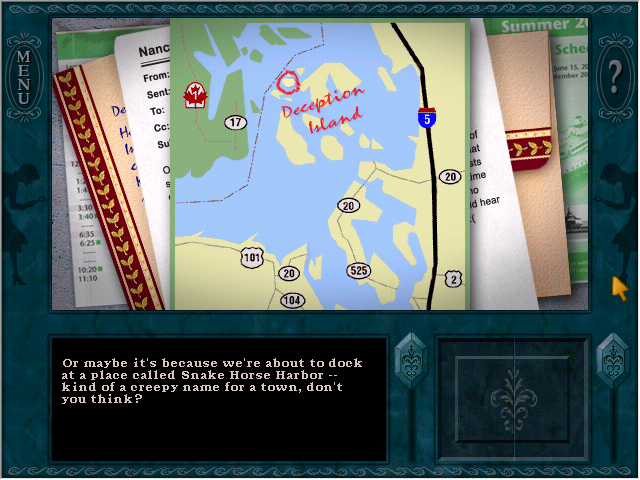
However, as the series grew (eventually reaching 30+ titles and counting), I often felt the charm was being steadily eroded. So, off I went, searching for something to fill the void. Unfortunately, most claiming to be "detective games" rarely required anything that could be called deduction. The closest thing I could find was the Sherlock Holmes series by Frogwares, but even that series began to trend toward action sequences and complicated systems. It wasn't until I stumbled upon The Return of the Obra Dinn that I truly felt that something new and exciting was happening in the genre. Sure, there had been limited use of fill-in-the-blank systems in the Detective Grimoire series and a few others, but none had utilized it in the same way. I found it hugely inspiring and wanted to use it in my own detective game!
Unfortunately, as an indie game developer with a team of two, a sprawling 3D game felt out of reach. There were small teams trying to recreate the magic of the Nancy Drew games, but their projects were taking 5-10 years to complete, and something on the level of the Sherlock series was completely out of the question. I knew I wanted to make a 2D game, but I doubted that special sense of investigation, discovery, and deduction could be replicated in a 2D world. Enter: The Case of the Golden Idol.
Fill-in-the-Blank Deduction: Simple but Effective
I was far from alone in being blown away by The Case of the Golden Idol. It managed to boil down the detective genre into an incredibly satisfying gameplay loop, forgoing all the usual 2D fuss of waiting for your character to walk slowly across the screen in order to make a pointless comment or suffering through boring dialogue. There were no ridiculous inventory puzzles or clunky mind-map systems. All you had to do was study the scene and prove you knew what happened and why by filling in a Mad-Lib. I was annoyed I hadn't thought of it myself!
The Prototype
At first, I wanted to write a mystery as dark and serious as my inspiration. I toyed with Lovecraftian tales and mulled over an Agatha Christie-style mystery. I even made a rough one-scene prototype for a cursed expedition called "Death in Egypt".
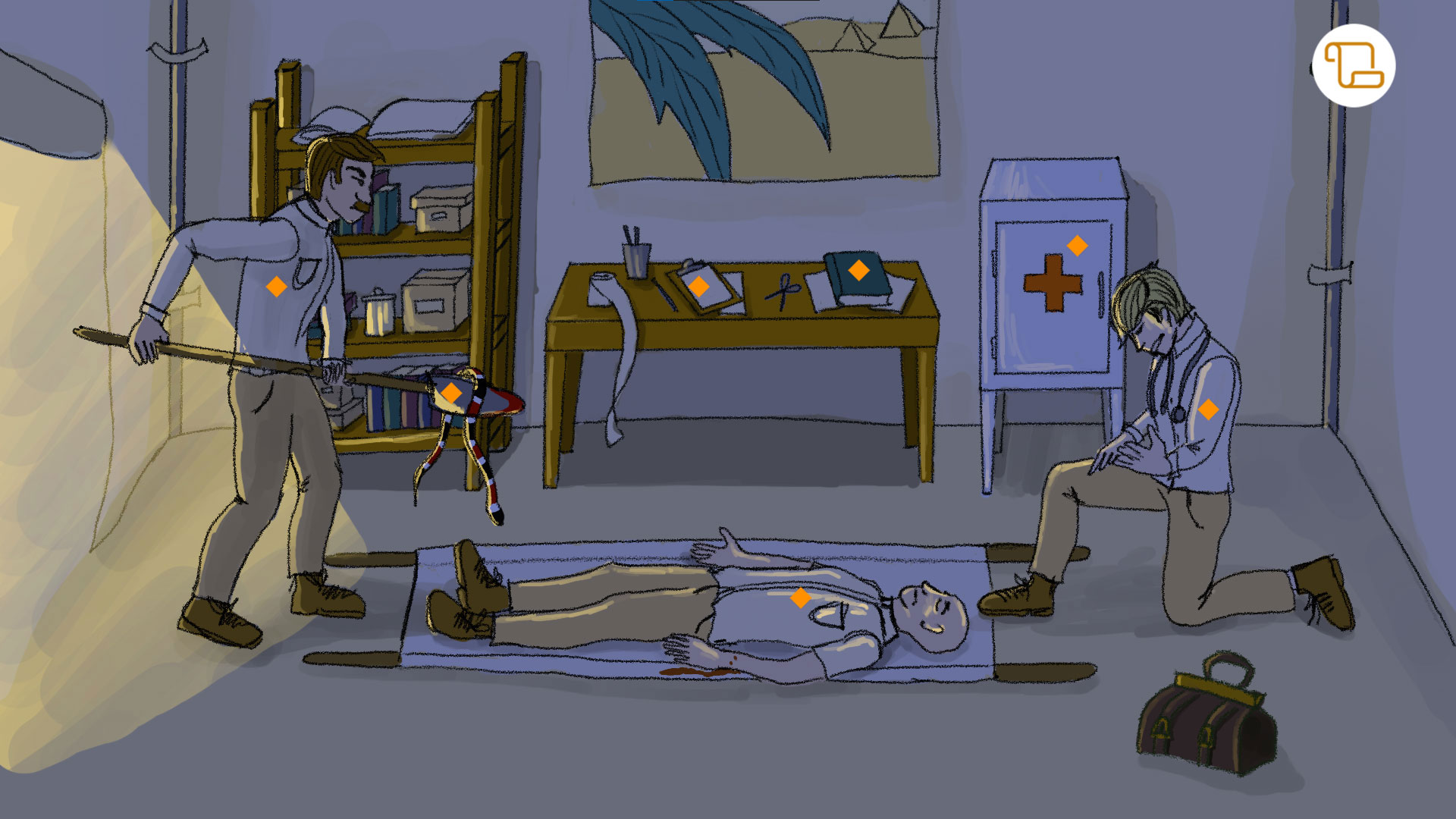
But as I continued to work on it, I felt intimidated by the task. Not only was Golden Idol a tough act to follow, but it had been many years since I had practiced drawing beyond a few sketches here and there. Anatomy was never my strong suit, and this game was going to require LOTS of characters—to say nothing about background art! Then there was the simple fact that I'd never shared my own writing with the world before. Taking all that together, I decided I would feel much more comfortable making something silly.
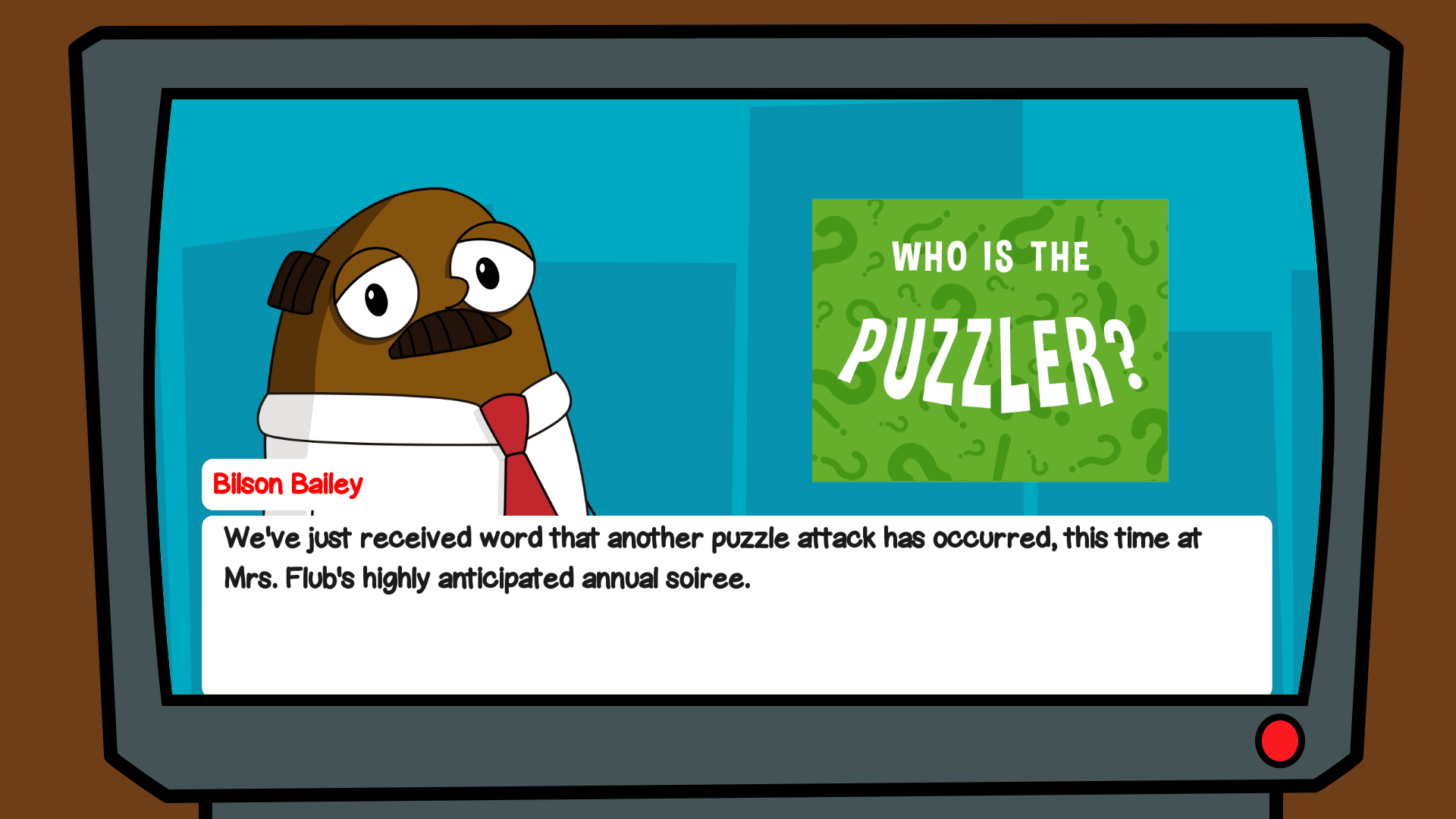
We already had spent some time messing around with a funny prototype inspired by the Puzzle Agent series called "The Puzzler's Revenge". I enjoyed the lower stakes and kooky characters, so I wondered: would anyone be interested in a detective game that was just about one really bad day?
As I started sketching out the general idea for The Case of the Worst Day Ever, a number of questions swirled in my mind. If the game was super silly, would people expect it to be super easy? What about the absence of an overarching narrative? Would people be okay with 10 discrete cases that don't build up to some huge conspiracy?
By the time we'd released the very first demo on itch, I had become aware of Little Problems and was super encouraged to see that they seemed to be partnered with the publisher behind the Golden Idol games (though this ended up changing at some point, not sure what happened). I took that as proof that there must be a market for "cozy" deduction games.
The Levels
One of the first things I did was create a big list of silly scenarios that could ruin someone's day. The bake off and bingo were the ones I was most excited about. As I sketched those out, a picture of who might be in the family started to form. The only thing I knew for sure was that there was going to be a corgi, a cat, and a teenage girl. The rest was basically done by the seat of my pants. I'd actually had the ideas for Cases 4 and 6 a while ago, back when I was thinking I would make a more traditional detective game.
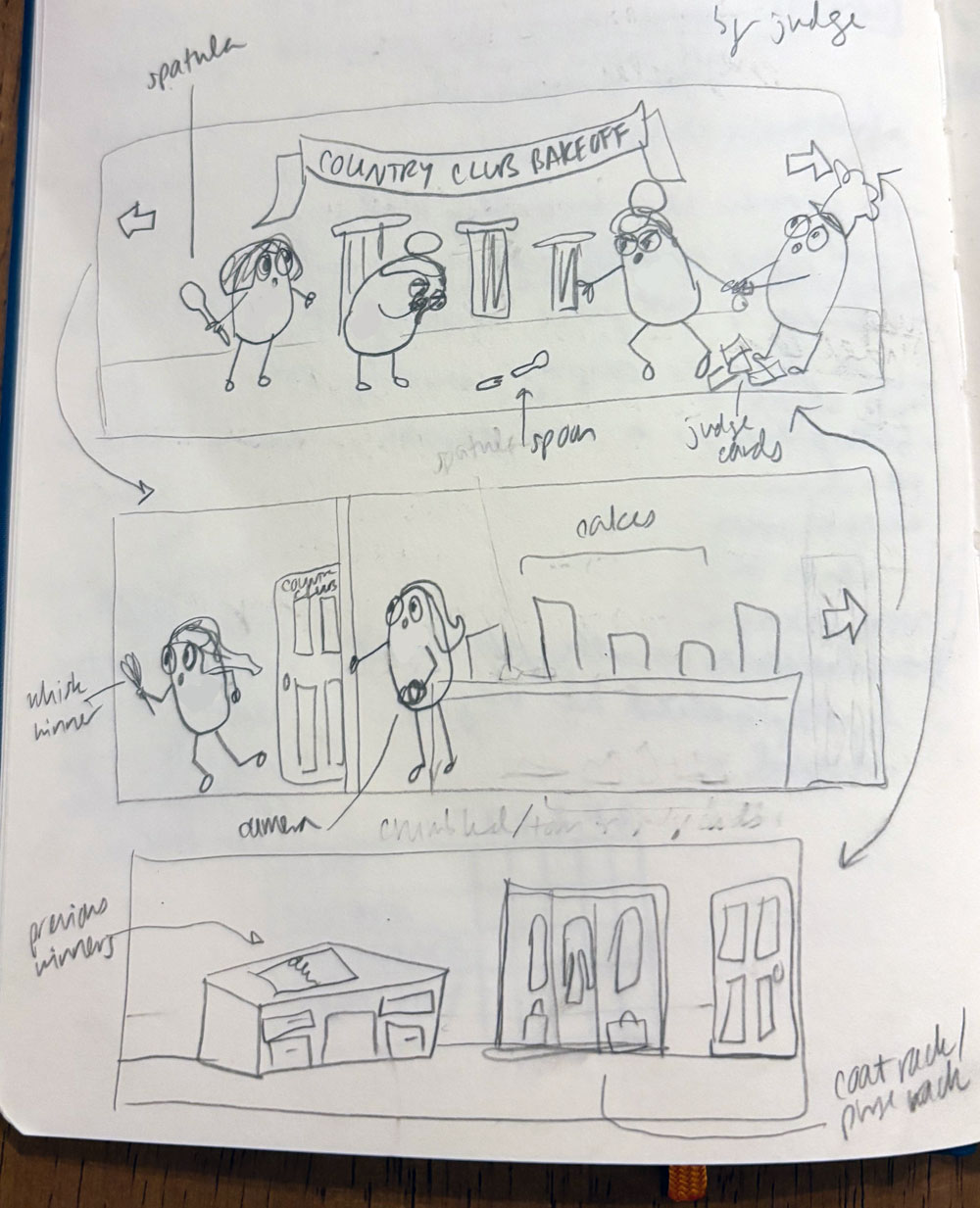
Each case started as a rough sketch in my notebook and was fleshed out from there. I ultimately had a lot of fun creating the scenarios, but the expectation of increasing complexity and difficulty became stressful towards the end. By the time I got to Cases 7-10, I started doubting the entire game, my life choices, etc. I ended up taking some risks that had mixed reception (I love logic grids, okay?!*), but I'm so glad I didn't give up. Case 9 definitely ended up being one of my favorites, yet there were moments where I thought I would never pull it off!
*I have literally been wanting to make a logic grid game for at least 8 years. They have so much potential!
The Art
Compared to our other games, we had more immediate interest and playtesters for the demo, so that was encouraging, but looking back...there were signs that the artwork was sending the wrong signals. I am a graphic designer by trade, not an illustrator. However, I used to make these stylized vector drawings based on scenes from the Nancy Drew games, so it felt natural to try to adapt that style to suit this game.
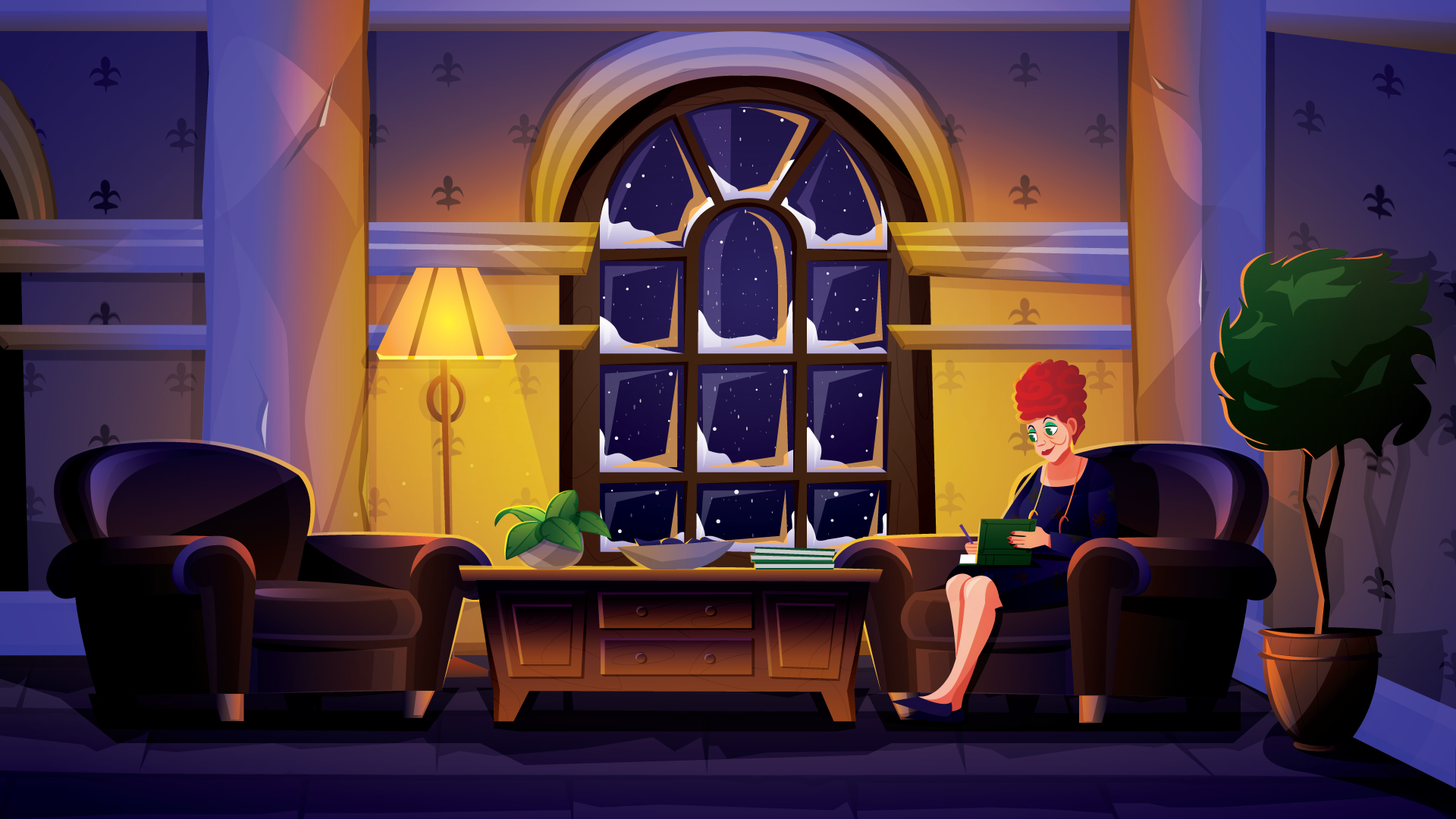
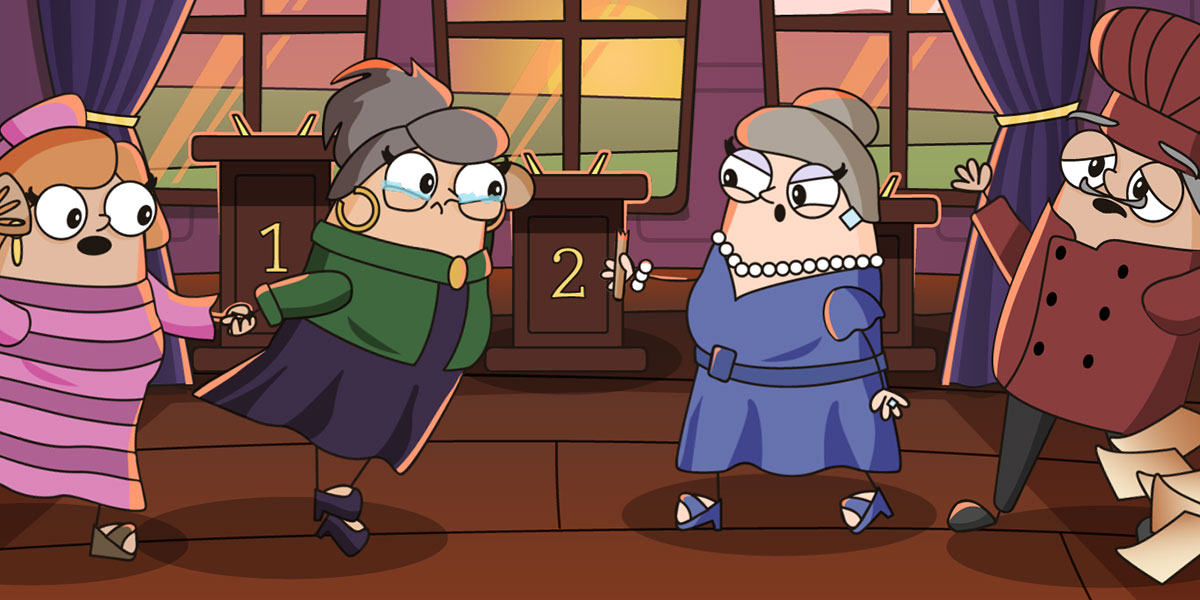
Unfortunately...these drawings took FOREVER to make, so I knew I had to simplify in order to get this game done in this decade. We entertained the idea of hiring someone else to do the art or at least make the characters, but ultimately we weren't happy with the result at the price point we could afford. So...I did it all. Mr. Potato Head-esque people were born, and simple line art backgrounds became the aesthetic. Did I love it? No. Did I hate it? No. We thought it was cute and hopefully would communicate that this was not a hardboiled detective game. But the thing is...while the subject matter isn't serious, the puzzles kinda are—at least, most players thought so!
Throughout the entire process, we consistently got completely opposite feedback. Players would say the art was cute and that the puzzles felt just right. Others said they were way too easy and that the game looked like something for preschoolers (and that perhaps a preschooler had made the art lol). Then came the people who said the puzzles were way too hard but had no opinion on aesthetics. Others were completely turned off by the art and wouldn't even try the game. Then, literally in the same day, we would hear from people who said the art was their favorite part!
Of course, you can't please everyone, but the fact that lovers of the genre wouldn't even give it a try should have been a major red flag. But at that point, we were in too deep and had to soldier on.
The Difficulty
As previously mentioned, it was hard to get a feel for how difficult the game really was. As the designer, it was nearly impossible to even guess before playtesting began, because when you know all the answers, everything seems painfully obvious. I always knew I was setting out to create increasingly brainteasing cases, but how hard was too hard? Well...it depends on who you ask, apparently.
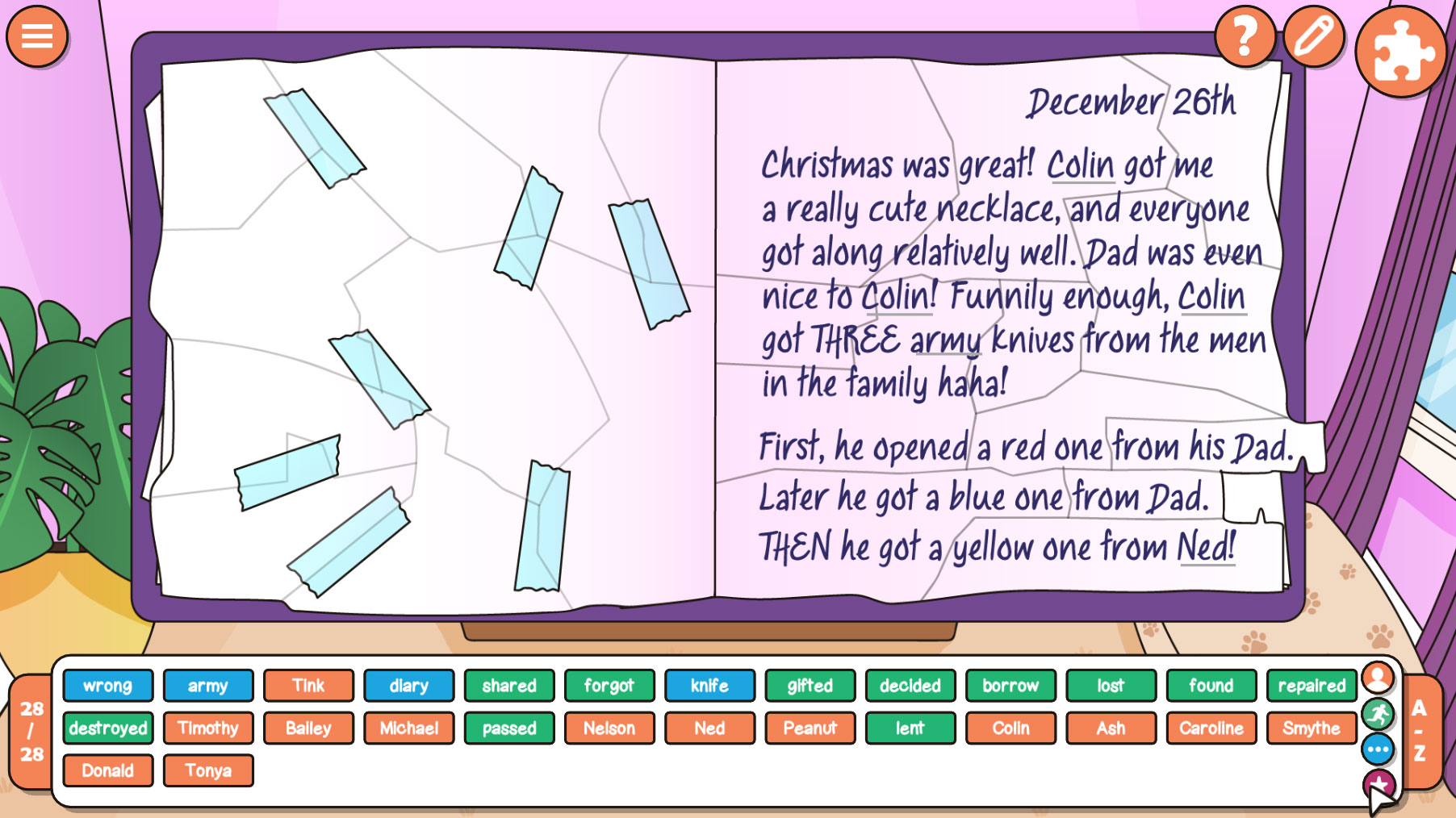
During Steam Next Fest, we got to watch a lot of people stream the demo, which is always invaluable. To my shock, however, I kept seeing people quit during Case 2! They would blaze through Case 1 (as they should), and then hit a brick wall with Case 2. Several wondered aloud if the game was broken because they were sure their answers were correct. Only a few stuck around to find out that the game was, in fact, not broken.
Those excruciating streams are the reason the game now has a robust hint system and a way to check which blanks are wrong. I always had a few hints in there, but it wasn't until seeing people truly struggle that I realized how critical those two features were. Case 2 was not intended to be super hard at all, but to some, it really was.
As I shared more and more cases with our awesome playtesters, many changes were made due to their invaluable feedback. In the end, it seemed like I had succeeded in creating something challenging, yet solvable, but I still was routinely surprised to hear that the game was, in fact, very difficult.
I toyed with the idea of making it a lot easier. After all, it was cutesy and had a ridiculous story. Shouldn't it be more on the level of Duck Detective? Honestly, I'm still asking myself that question, but when it came time to ship it, I decided to just leave it as is. I always set out to make games that I would want to play. And as a player, I like a challenge.
The Conclusion
It's been very cool to read player reviews and dip into Discord discussions now that the game is out. As for the questions I initially asked myself, here's what I think the answers are:
1) If the game was super silly, would people expect it to be super easy?
ANSWER: seems like it! Though thankfully most players report being pleasantly surprised by the difficulty spike, I've definitely seen ample evidence that silly vibes = easy ride to many people.
2) Would people be okay with 10 discrete cases that don't build up to some huge conspiracy?
ANSWER: sort of! For the most part, people have not complained about the lack of an overarching, deep narrative. However, looking back, I definitely think the game would have been better if it had one.
3) And what about those risks taken in Cases 7-10?
ANSWER: some people feel very strongly about them! Case 7 required the most changes during playtesting, and I'm not sure I ever got it where I wanted it to be. As for Case 10, I personally really like it, but some people hate it so much they won't play it, so...hard to argue with that!
While this game may not have turned out quite like what I pictured in my head, I'm still very proud of what we accomplished. I was quite nervous about sharing it with the world, but now that I've taken my first stab at the genre, I feel confident I could improve with more practice. I have a few new ideas cooking...but we'll just have to wait and see what the future holds!


